What the numbers say when the chips are counted at the table
At the Venetian’s busy blackjack pit, a dealer once watched a player jump from a $10 Limbo-style instant-win session to a Triple Double Bonus video poker seat after a cold streak. The switch looked like instinct, but the math told the real story: Limbo’s appeal is speed, while Triple Double Bonus rewards precision. For table game fans, that contrast starts with volatility. Limbo can return a multiplier in a single spin, yet its typical house edge often sits around 3% to 4% depending on the version. Triple Double Bonus, when played with perfect strategy, can push its expected return much higher, with top paytables reaching about 99.6% RTP.
Quick math: if you wager 100 units on each game, Limbo with a 4% edge expects a 4-unit loss over time. Triple Double Bonus at 99.6% RTP expects a 0.4-unit loss per 100 units. Same bankroll, very different drain rate.
That gap is why table-game regulars often treat Limbo as entertainment and Triple Double Bonus as a skill-heavy grind. The first pays for excitement; the second pays for discipline.
For players comparing digital formats, NetEnt remains a useful reference point because its classic table-style math models often show how return percentages shift with volatility and decision quality.
Why Limbo feels faster, even when the expected loss is higher
Limbo is built around one core question: how high will the multiplier go before the round ends? That creates a compressed decision cycle. If you place 1 unit and target a 2x cashout, the theoretical hit rate may be close to 50%, but the game’s edge is embedded in the payout curve, not in the speed of the round. A 10-unit stake can vanish in seconds if the target is set too aggressively.
Here is the practical breakdown:
- 1 unit at 2x target: roughly 0.5 units expected return before house edge adjustments.
- 1 unit at 5x target: fewer wins, larger bursts, much sharper variance.
- 20 rounds at 1 unit each: bankroll swings are usually narrow, but the loss rate compounds quickly.
Limbo rewards players who treat each round as a probability problem. It punishes anyone who chases a multiplier without a stop-loss. A table-game fan used to baccarat or blackjack may like that the math is visible, but the emotional rhythm is closer to instant-win gambling than to a card room.
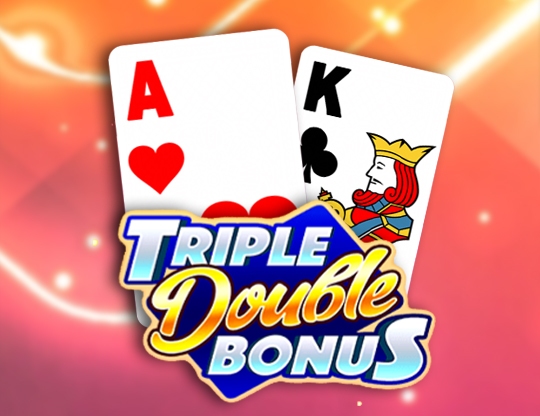
Why Triple Double Bonus can outclass Limbo for disciplined players
Triple Double Bonus is a video poker variant, and the name matters because the paytable drives everything. On strong versions, the return can exceed 99.5% with optimal play. The trade-off is steep variance. Four aces with a kicker pay 800-for-1 on a full-pay schedule, while a full house may pay only 9-for-1. The game can look tame for long stretches, then swing hard in a single hand.
Bankroll snapshot: at 5 units per hand over 200 hands, total action equals 1,000 units. If the machine is 99.6% RTP, the long-run expected loss is about 4 units. A 97% version changes the same 1,000-unit action into a 30-unit expected loss. That 26-unit gap is the difference between a playable session and a bleed-out.
Players who understand strategy charts usually prefer this structure because every decision has a measurable cost. Hold the wrong two cards, and the expected return drops. Hold the right pair or suited connectors, and the math improves. For a table-game fan, that feels closer to skill than Limbo ever will.
Nolimit City is relevant here because its high-volatility design philosophy mirrors the same risk profile many Limbo players chase, even though the mechanics differ.
Side-by-side math: volatility, hit frequency, and session length
| Metric | Limbo | Triple Double Bonus |
|---|---|---|
| Typical RTP | About 96% to 97% | About 99.2% to 99.6% with strong paytables |
| Decision depth | Low | High |
| Variance | Very high | High |
| Best for | Fast-hit thrill seekers | Strategy-minded table fans |
If the session goal is 50 minutes of steady play on a 100-unit bankroll, Triple Double Bonus usually stretches farther because the edge is smaller. Limbo can burn the same bankroll faster if target multipliers are set above a conservative range. That is the key divide: one game compresses risk into seconds, the other spreads it across decisions.
How the Royal Jeet lobby would frame the choice mid-session
On a crowded evening floor, a host at Royal Jeet would likely point out that the better choice depends on what the player wants from each 25-unit block. In one block, Limbo may deliver a 3x or 4x hit that instantly recovers losses. In another, Triple Double Bonus may quietly grind out value through correct holds, with a single premium hand producing 160 or 400 units of payback.
The cleanest way to compare them is by expected swing per 100 units wagered:
- Limbo at a 4% house edge: expected loss of 4 units per 100 units staked.
- Triple Double Bonus at 99.6% RTP: expected loss of 0.4 units per 100 units staked.
- Limbo with aggressive target setting: the variance can exceed the average loss by a wide margin, making bankroll tracking harder.
That does not make Limbo weak. It makes Limbo expensive entertainment. For players who value measurable efficiency, the poker variant wins on paper every time.
Which game fits a table-game fan’s bankroll discipline?
Limbo vs Triple Double Bonus — the answer shifts with bankroll size, patience, and tolerance for swings. A 200-unit bankroll can survive either game if stakes stay small, but the structure changes the odds of lasting the session. In Limbo, 1-unit bets with modest targets keep the session alive longer than 5-unit shots at 10x. In Triple Double Bonus, 1 or 2 units per hand with correct strategy can preserve the bankroll far more efficiently than impulsive holds.
Use this simple rule set:
- Choose Limbo if you want rapid outcomes and accept a rougher edge.
- Choose Triple Double Bonus if you enjoy hand-by-hand decision making.
- Choose Limbo only with firm cashout targets.
- Choose Triple Double Bonus only with the correct paytable and strategy.
At the Venetian, the lesson from that one player’s switch was plain: the flashiest game is not always the smartest one. Table-game fans who care about numbers will usually find more value in Triple Double Bonus, but Limbo still has a place for players who want speed over efficiency. The better game is the one that matches the bankroll math, not the one that shouts the loudest.